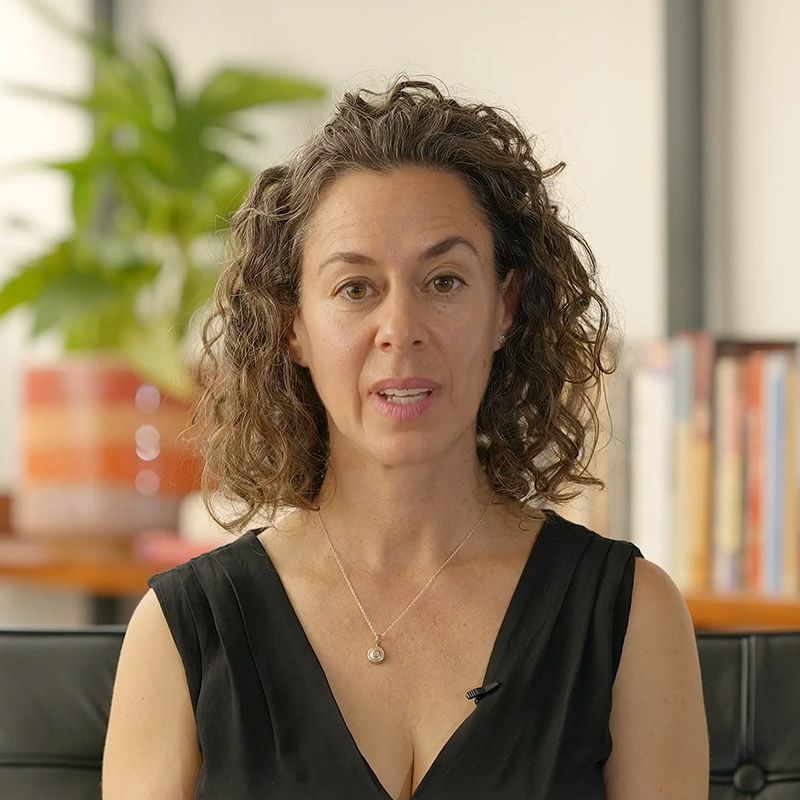
Carolyn Gartner
Grief Focused Social Worker
New York City Westchester & Westchester Greater New York
Grief and Loss Personal Growth and Self-Esteem Anxiety & Chronic Illness
Offers free consultation
Verified by Autumn
As a licensed psychotherapist with a specialization in grief and loss, I offer a space where emotional pain is met with compassion and curiosity in a way that ensures that my clients feel supported and can grow but not feel ashamed. I work with individuals navigating complex grief—whether that’s after the death of a loved one, a non-death loss like divorce or estrangement, or a life transition that’s shaken their sense of identity or direction. I believe therapy is where science meets soul—where clinical tools and human connection come together to support healing. Together, we’ll focus on building practical coping tools for anxiety and depression, while also making space for personal growth, insight, and meaning. When we sit together, I aim to meet you where you are—with warmth, attentiveness, and deep respect for the intelligence of your emotional world. I know that grief doesn’t follow a timeline, and that healing can be nonlinear, layered, and deeply personal.
I graduated from NYU Tisch School of the Arts with a BFA in filmmaking. Before becoming a therapist, I was a hospice social worker for nine years, supporting hundreds of patients and caregivers through end of life. I wrote a book about my experience: Death, Brooklyn, and the Gritty Side of Grace. I’ve been a practitioner of yoga and meditation for 20+ years. I attended Hunter School of Social Work and graduated in 2012. After becoming a LCSW, I founded The Center for Integrated Grief and I recently received my FT: Fellow in Thantology through the Association for Death Education and Counseling. I’ve written a book about my experiences entitled, “Death, Brooklyn, and the Gritty Side of Grace” and have been interviewed by Huffpost, Parade Magazine, American Tributaries Podcast, and the documentary Paw Prints.
My philosophy is that therapy is where science meets soul—where clinical tools and human connection come together to support healing. I believe in the balance of function and intuition, science and art. I use evidence-based practices while attuning to my clients as whole people, often incorporating somatic work by asking, “What do you feel in your body?” I approach therapy with compassion and a commitment to building trust, so that I can gently challenge clients in ways that feel supportive, never shaming. Together, we focus on developing practical coping tools for anxiety and depression, while also making space for insight, meaning, and personal growth. I often ask whether clients are open to practices like homework or short meditations, tailoring the process to what feels right for them. Grief is Universal but Loss is Individual: Compassion comes from understanding and respecting our clients for who they are. Our holistic assessment guarantees personalized care psychology We Understand All Grief and Loss: We work with all forms of grief including traumatic, prolonged (complicated) and disenfranchised. We work will all kinds of loss and transitions: divorce, miscarriage, loss of job, loss of job, loss of dream group Time Tested Grief Models and Tools: We are trained in evidence based models, offer coping tools and writing exercises.
For deeper work, I am trained in grief specific models. I also use IFS (parts work) and Jungian Shadow work. For coping techniques I use CBT and MBSR (mindfulness). I also like to use visualization tools with clients.
- Bisexual
- Cancer
- Chronic Pain
- Chronic Relapse
- Coping Skills
- Dementia
- Depression
- Divorce
- Family Conflict
- Geriatric and Seniors
- Lesbian
- LGBTQ+
- Life Transitions
- Open Relationships Non-Monogamy
- Pregnancy, Prenatal, Postpartum
- Relationship Issues
- Self Esteem
- Sex-Positive, Kink Allied
- Sleep or Insomnia
- Spirituality
- Stress
- Veterans
Certifications
- License - Licensed by State of New York / 088054-1 Training - Licensed psychotherapist (LCSW
- LICSW
- LMHC
- LMFT
- LCAT
- LP) - Trained in Jungian Shadow Work and CBT tools - Level 1 trained in IFS (Internal Family Systems) and PGDT (Prolonged Grief Disorder Therapy) - Certified in MBSR (Mindfulness-Based Stress Reduction) - Certificate from Association for Death Education Counseling (2023) - Fellow in Thantology
Education
- Hunter School of Social Work (LCSW, 2013)
- New York University (B.A., Film)
- Grief and loss
- Life transitions
- Personal growth and self-esteem
- Religion and spirituality
- Women’s mental health
- Bisexual Allied,
- Gay Allied,
- HIV / AIDS Allied,
- Lesbian Allied,
- Non-Binary Allied,
- Queer Allied,
- Racial Justice Allied,
- Sex Worker Allied,
- Single Parent,
- Transgender Allied
Years In Business
- 11
Number Of Employees
- 4
Service Areas
- New York City
- Westchester & Westchester
- Greater New York
Languages
- English
- Spanish (other clinicians)
- Mandarin (other clinicians)
- Cantonese (other clinicians)
Payment Method
- ACH Bank transfer
- Cash
- Check
- Paypal
- Visa
Grief Counseling on the Stoop Carolyn's training is rooted in home hospice care in the heart of Brooklyn. Therapy was sometimes at the bedside of the dying person. In many instances, Carolyn found herself perched on the closed lid of a commode (a portable toilet) in the confines of cramped apartments, providing compassionate support to a caregiver holding their loved one's hand.
One poignant memory stands out—a warm day as the sun dipped below the horizon, Carolyn sat on a brownstone stoop alongside a caregiver, patiently awaiting the arrival of the funeral home. This caregiver, an only child raised by a single mother, was a testament to the unique bonds formed in the face of loss.
Our center was born out of the profound experiences gained from guiding individuals through the complexities of the end-of-life process and understanding how these experiences shape the grieving journey. We embrace a holistic approach that extends support not only to caregivers before the inevitable but also to those who are navigating the challenging path of grief afterward.
We are able to transform our experiences to serving grievers whose loved ones have died in other ways; either by suicide, accident, pregnancy loss or natural disaster. We apply our specialized training to non-death-related losses as well—be it the dissolution of a marriage, the loss of employment, or even the abandonment of a cherished goal. Ambiguous loss, a concept we embrace, encompasses situations where closure remains elusive. We also address the intricacies of living losses, the losses that are ongoing and indefinite, intertwined with the experience of chronic illness or caregiving.
At the core of our philosophy lies the harmonious fusion of function and intuition. We seamlessly integrate clinical tools with the art of empathetic connection. We are not just professionals; we are compassionate humans attuned to the unique needs of our clients.
Our initial assessments are informed by our work as hospice social workers. All social workers are taught how to do a bio-psycho-social-spiritual and in hospice we add financial. In therapy we don’t add the financial part.
Biological - Not biography. Certainly true for chronically ill folks. So, what is their level of functioning, pain, etc. And this is important for everyone, I had a client referred to me by his primary care physician. He was at home and thought he was having a heart attack and called 911 - it a panic attack. However, he does have high blood pressure. In addition to exercise, I was part of the prescription from his doctor.
Pscyho- For psychological. History of depression, anxiety, grief, suicide, eating disorder, substance abuse. Family hx too.
Social - support systems or lack of support. Part of this is PIE - a very social worker theory - person in environment. This can also be a clue to disenfranchised grief - for our grievers. Spiritual or religious- does the person have a belief system? Has it been helpful? Is there religious dissonance within the person or within the family?
All mental health assessments should include religion or spirituality. In hospice and in grief it’s particularly important. I also ask people what do they believe happens to us after we die? Heaven + Hell? Reincarnation? Or just go into the ground? We use that in work as well.
We are listening for the 1) interpersonal: relationships, work, family, social media and 2) intrapersonal: your internal.
Grief counseling is a specialized form of therapy designed to support individuals navigating the complex emotions associated with loss. Whether grieving the death of a loved one, the end of a significant relationship, or other profound life changes, this type of therapy provides a safe space for expressing feelings and exploring coping strategies. Grief counselors, trained in understanding the nuances of bereavement, guide clients through the healing process by encouraging reflection and emotional expression. The goal is not to forget the loss, but to find a way to live with it, fostering resilience and a renewed sense of purpose. Engaging in grief counseling can be a crucial step towards emotional healing and finding balance after loss.
With kindness and care, we use evidence-based practices and peer-reviewed tools to help clients build continuing bonds with loved ones, make space for productive grief, and teach coping techniques to help you get through the days. One example is the Dual Model Process of Grief that helps clients oscillate between loss and restoration. We help you to rebuild your life and reinvent who you are after the loss. We provide strategies for coping and healing.
There are many aspects to grieving. As one client said, “grief isn’t just about grief.” Some clients need a space to talk about disturbing aspects of how their loved one died—things they can’t mention to other people. Some clients simply need coping techniques. Others need to parse out feelings of blame, shame, or guilt. Some people need support for changed family dynamics. Many folks need support balancing grief while continuing to pursue goals and live life, which your loved one would have wanted for you.
We know finding the right fit is everything. Our clinicians are specifically trained in grief therapy. Our founder is a former hospice worker of almost a decade, supporting hundreds of patients and caregivers through the end-of-life process. Our other clinicians have worked with older adults, in cancer centers, and specialize in non-death loss as well.
Thanatology is the study of death, dying, and bereavement. Carolyn likes to add that it’s “the study of death, dying, and bereavement… in order to improve services and outcomes.” It’s how we approach our practice to better help those experiencing loss. Thanatology provides research, context, and evidence-based practices from an interdisciplinary approach. I’m a certified thanatologist holding a fellowship in thanatology from The Association of Death Education Counseling.
If you are struggling with the loss of a parent, our virtual therapy sessions offer a safe space for you to process your grief. With a focus on thanatology and other effective practices, our personal or group sessions can provide you with the support you need to navigate this difficult time. Reach out to us today to schedule a session.
Our virtual therapy services in Brooklyn provide a safe and supportive space to process the grief and loss of a family pet. Our experienced therapists offer evidence-based interventions to help individuals and families navigate this difficult time with compassion and understanding.
Are you struggling with the loss of your partner, whether it be a spouse or long-term partner? Our virtual therapy sessions offer a safe space for you to explore your emotions and heal through your grief. Our therapists use a variety of techniques including, Thanatology to best help you navigate the grieving process. Whether you prefer one-on-one sessions or group therapy, we are here to support you on your journey to healing.
Are you the Caregiver to a partner, family member, or individual? If yes, you may be in need of support for yourself. These sessions can help caregivers work through their feelings of guilt, grief, and burnout, and provide them with coping strategies to better manage their caregiving responsibilities. Additionally, virtual therapy services can offer a sense of community and connection for caregivers who may feel isolated or overwhelmed in their role, either in individual or group sessions.
- Cognitive Behavioral Therapy (CBT)
- Internal Family Systems (IFS)
- Jungian Therapy
- Mindfulness-Based Stress Reduction (MBSR)
- Somatic Experiencing/Sensorimotor Therapy
Shadow work in psychology refers to the process of exploring and integrating the unconscious aspects of the self, such as repressed emotions, unresolved traumas, and negative beliefs. By shining a light on these hidden aspects, individuals can gain a deeper understanding of themselves and their behaviors, leading to personal growth, healing, and self-acceptance. The goal of shadow work is to bring these shadow aspects into the light in order to achieve greater self-awareness and wholeness. Our founder and director, Carolyn Gartner provides insights and applications of Shadow Work through the teachings of Phil Stutz, whom she has had personal training on the subject. Book a consultation with Carolyn today to see if Shadow Work is right for you!
Yes, Luisa is our Spanish-speaking therapist, and Tania speaks both Mandarin and Cantonese.
My session fees range from $150-200 per 45 minute session.
Yes, we accept Aetna, Cigna, Northwell Direct, and Medicare.
Address
Brooklyn, NY
Travel Preferences
I support clients virtually (phone/internet)
Not the right fit?
We'll personally connect you with someone trusted.
Not the right fit?
We'll personally connect you with someone trusted.
Similar providers near you
Other trusted professionals offering similar services to Carolyn Gartner.
Jane Dorlester
Clinical Social Worker/Therapist
New York City Westchester Long Island
Grief and Loss Coping Skills Trauma and PTSD
Offers free consultation
Verified by Autumn
Stephanie Omens
Child Grief Psychotherapist
New York New Jersey Connecticut
I help parents talk to their children about death and other difficult events
Offers free consultation
Verified by Autumn
Alex Mammadyarov
Grief Focused Psychotherapist
Greater NYC Long Island & Westchester Upstate New York
Grief & loss Anxiety & transition Trauma & relationships
Offers free consultation
Verified by Autumn